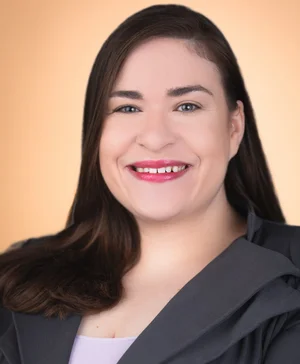
Christine Hà: What If the Method Isn’t the Measure of Ability?
Long before many disabled people encounter physical barriers...we often encounter something else. An idea. That there's a "right" way to do things. The right way to walk. The right way to read. The right way to cook. The right way to learn. The right way to work. And if we can't do it that way...it's easy to begin believing we can't really do it at all.
I don't think anyone sits us down and teaches us that lesson. I think we absorb it. Sometimes from teachers. Sometimes from strangers. Sometimes from people who love us and simply want to prepare us for how the world works.
Over time, those messages become something else. They become the quiet voice that says, "If I have to do it differently... maybe it doesn't really count."
Christine Hà has spent years quietly challenging that idea. Not by pretending blindness doesn't matter. But by showing us that doing something differently has never meant doing something less well.
Who is Christine Hà?
Christine Hà is an American chef, author, speaker, and disability advocate who gradually lost her vision because of neuromyelitis optica.
In 2012, she became the first blind contestant—and winner—of MasterChef US. Today, through her restaurants, writing, speaking, and advocacy, she continues challenging assumptions about blindness, disability, and what excellence can look like.
Many people remember Christine because she won a cooking competition. I think her greatest contribution is something much quieter. She challenges the idea that there is only one legitimate way to accomplish something.
More Than Cooking
When people watch Christine cook...they often focus on what she does differently. How does she know when onions are ready? How does she plate a dish she can't see? How does she measure ingredients?
Those are understandable questions. But underneath them sits another assumption. That there must be one correct way to cook. Christine quietly dismantles that idea. She doesn't ask people to lower their expectations. She invites them to question the expectations they had in the first place. Because great cooking was never about seeing. It was always about creating exceptional food.
The Lesson I Didn't Know I'd Learned
Writing about Christine made me realize something about myself. For years, I thought I was a terrible cook. Not "I don't really enjoy cooking." I genuinely believed I wasn't capable of it. At one point, I even managed to burn myself making Easy Mac. Easy. Mac.
A bowl of boiling water. A microwave mounted too high. A wheelchair. It was the perfect storm. I assumed the problem was me.
Years later, after becoming a martial artistist, competing in Tough Mudder events, a para powerlifter, and adapting to a world that wasn't designed with me in mind, I still believed I simply wasn't someone who could cook.
Then my cousin introduced me to universal design.
Honestly...I didn't want to hear it. I assumed an accessible kitchen would look clinical.Like I had given up trying to do things the "normal" way.
I worried people would walk into my home and immediately see disability. I worried they would think, "This is what she had to resort to." Looking back, I realize I wasn't worried about the kitchen. I was worried about what I believed the kitchen said about me.
Eventually, I renovated it. And something unexpected happened.
It turned out...I wasn't a bad cook. I had been trying to cook in a kitchen that wasn't designed for me. Now I genuinely enjoy trying new recipes. I get excited about learning new techniques. The thing that changed wasn't my ability. It was my understanding of what cooking was allowed to look like.
What Does This Have to Do with Disability-Affirmative Therapy?
One of the things I love about disability-affirmative therapy is that it doesn't only become curious about barriers in the environment. It also becomes curious about the barriers we've quietly begun carrying inside ourselves.
If you've spent years hearing that accommodations are "special treatment"...that assistive technology means you've somehow failed...or that asking for help makes your achievements count less...it's not surprising if you begin avoiding the very things that would allow you to participate. Not because they aren't helpful. Because you don't want to look different. You don't want people staring. You don't want to be pitied. You don't want people assuming you had an unfair advantage. That's one of the quiet ways internalized ableism works. It doesn't only change how we see ourselves. It changes what we allow ourselves to try.
Disability-affirmative therapy asks a different question. Not, "Why aren't you using this accommodation?" But, "What have you learned to believe about what using it says about you?" That's a very different conversation.
What Christine Changed
One of the things I admire most about Christine isn't that she found another way to cook. It's that she quietly gave people permission to stop measuring themselves against someone else's definition of how success is supposed to look. Because once you stop believing there is only one right way...new possibilities begin to appear. Not because your disability changed. Because the rules did. Or perhaps more accurately...because you finally realized they were never rules in the first place.
Why Christine Matters
Christine Hà didn't simply show the world that a blind woman could win MasterChef. She challenged something much bigger. The idea that doing something differently somehow makes it count less. I wonder how many dreams are quietly abandoned...not because disability makes them impossible...but because people learn there is only one acceptable way to pursue them.
Christine reminds us there never was. There has never been one right way to build a life. Only the ways that allow each of us to participate in it. I wonder if that's where change begins. Not by teaching disabled people to do things the "normal" way. But by helping all of us question why we believed there was only one way to begin with.