

Counselling & Health Advocacy Blog
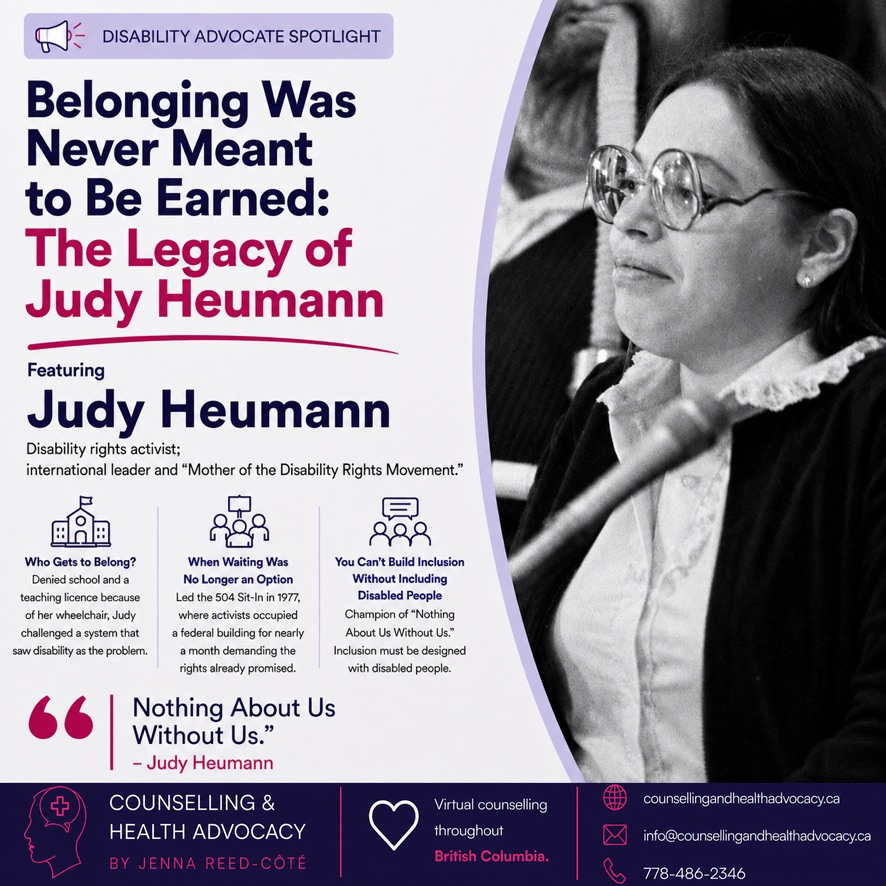
Belonging Was Never Meant to Be Earned: The Legacy of Judy Heumann
Judy Heumann spent her life challenging systems that treated disabled people as though belonging was something they had to earn. From being excluded from school to helping lead the 504 Sit-In, her advocacy advanced a powerful idea: disabled people already belong—and barriers, not disabled people, are what need to change.
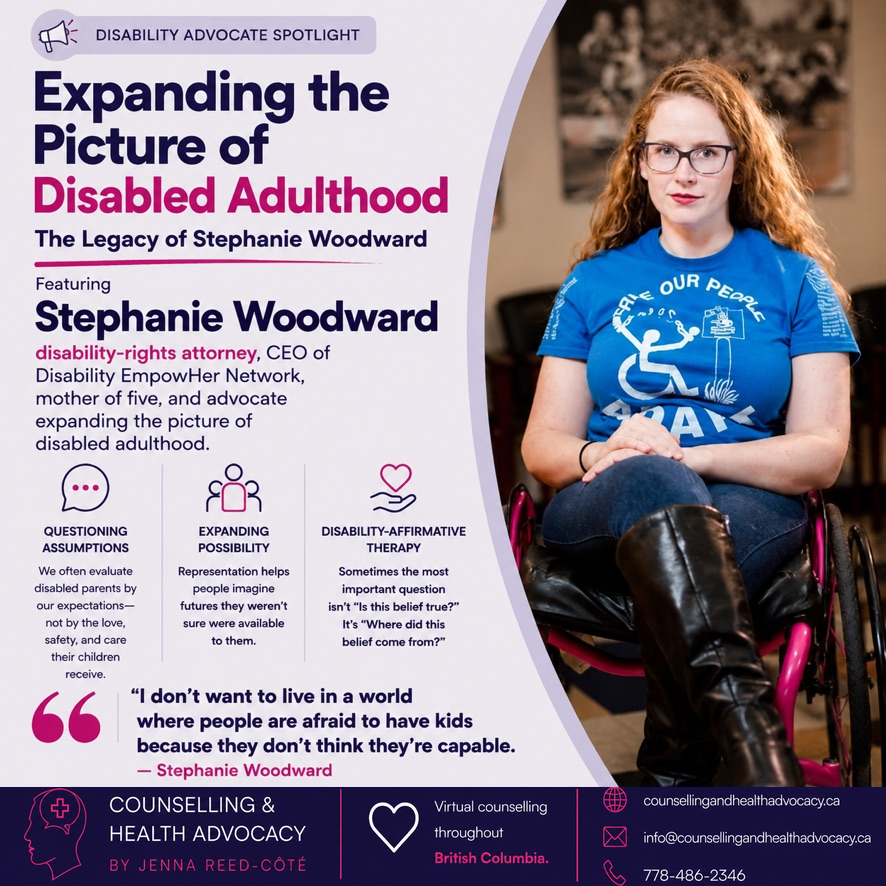
Stephanie Woodward: Expanding the Picture of Disabled Adulthood
Stephanie Woodward’s advocacy challenges assumptions about what disabled adulthood—and disabled parenthood—is supposed to look like. Her work asks us to consider how much of what disabled people believe about their possible futures comes from their own desires, and how much comes from futures they were rarely shown were possible.
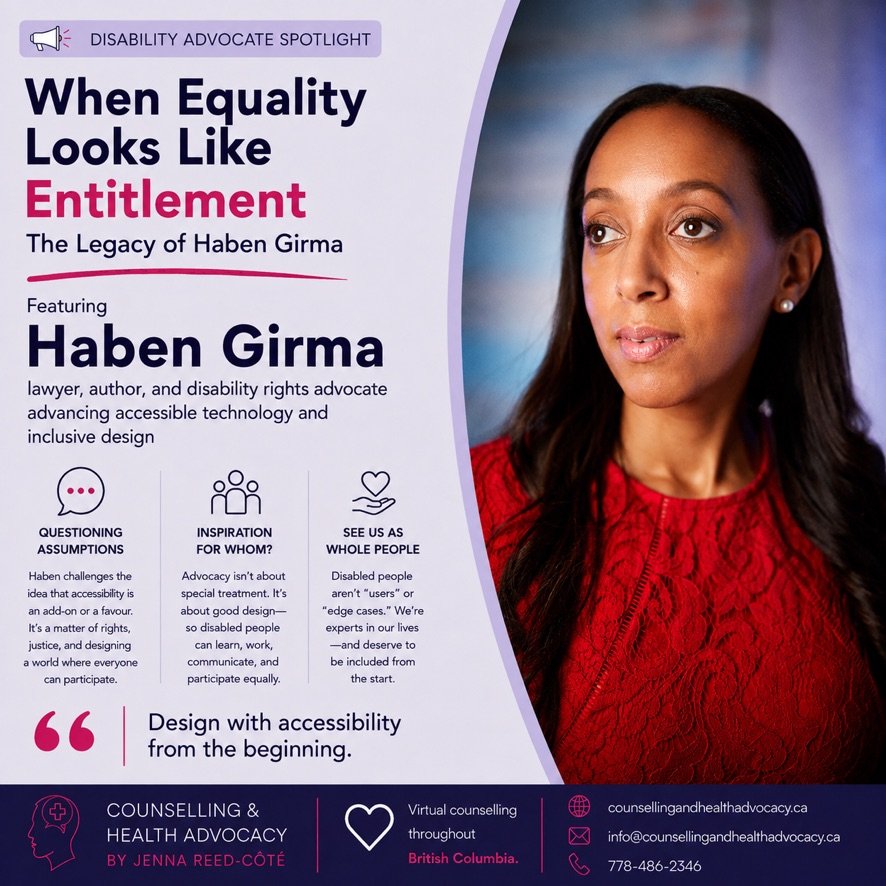
When Accessibility Comes Last, Disabled People Pay First: Haben Girma and Why Good Design Includes Everyone
Haben Girma’s advocacy challenges us to see accessibility not as an accommodation added later, but as part of good design from the beginning. Her work asks an important question: Why should disabled people carry the time, energy, and responsibility of adapting to barriers that better design could have prevented?
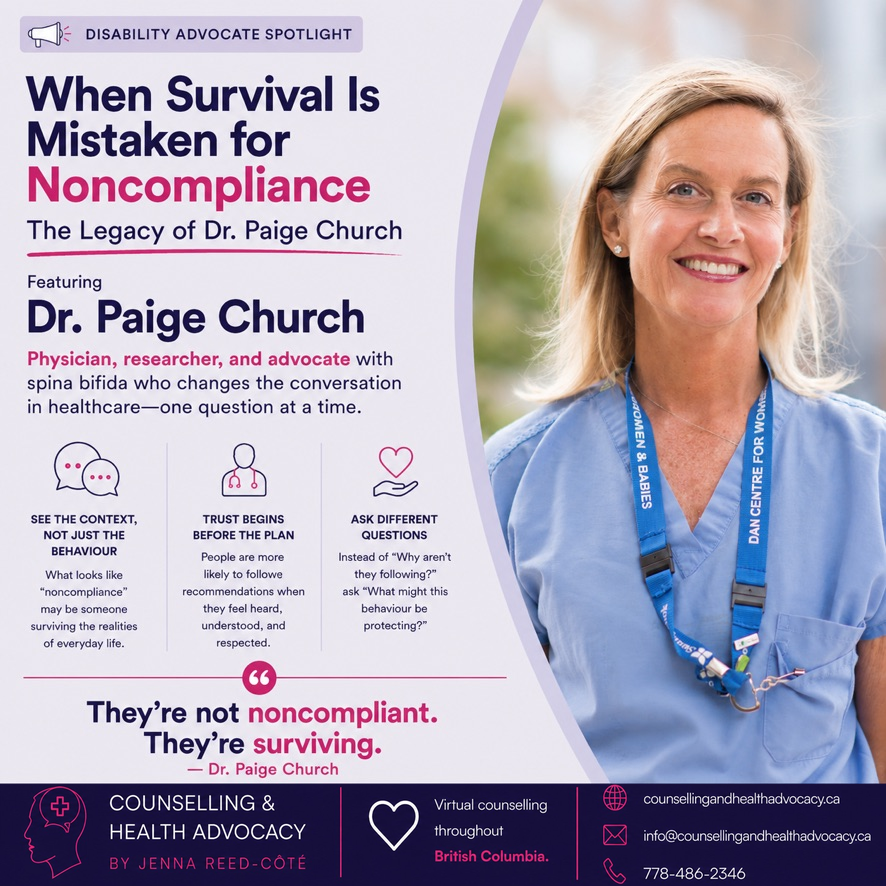
When Survival Is Mistaken for Noncompliance: The Legacy of Dr. Paige Church
Dr. Paige Church’s work asks us to look beyond “noncompliance” and become curious about what a treatment plan is asking of someone’s life. Her perspective shows how making room for lived expertise alongside medical expertise can change not only the questions healthcare professionals ask—but the trust patients bring into the room.
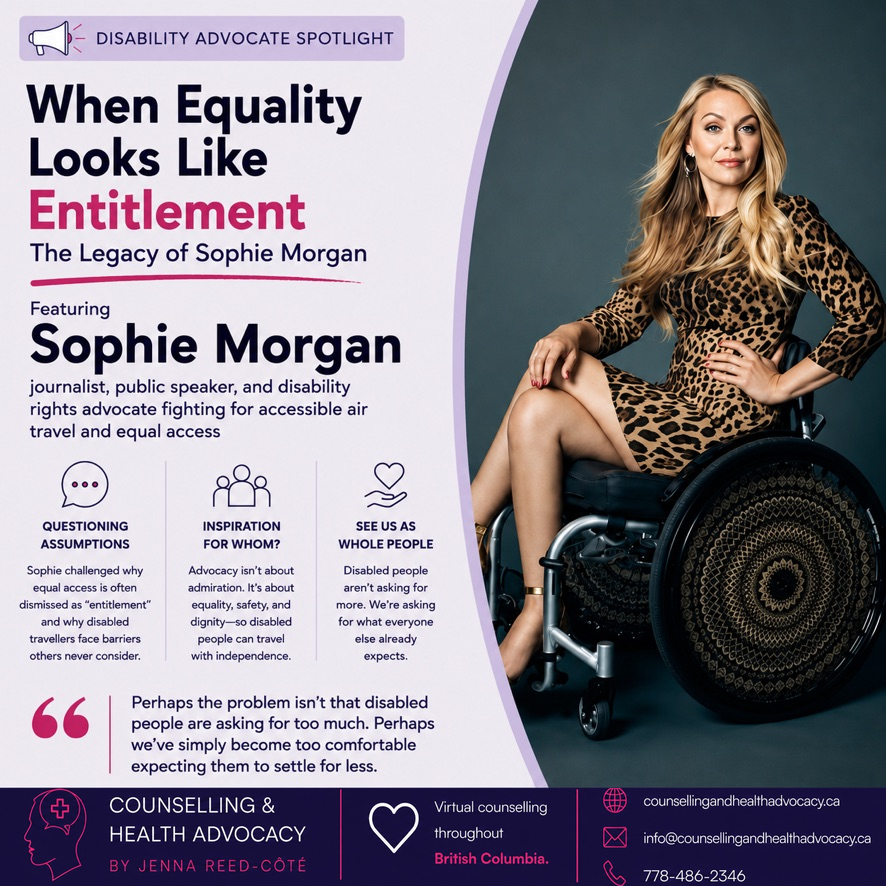
When Equality Looks Like Entitlement: The Legacy of Sophie Morgan
Sophie Morgan’s advocacy asks a question many disabled people have learned to ask themselves: Am I asking for too much? Her work challenges that assumption—showing how equal access can be mistaken for entitlement when disabled people have been expected to accept less for far too long.
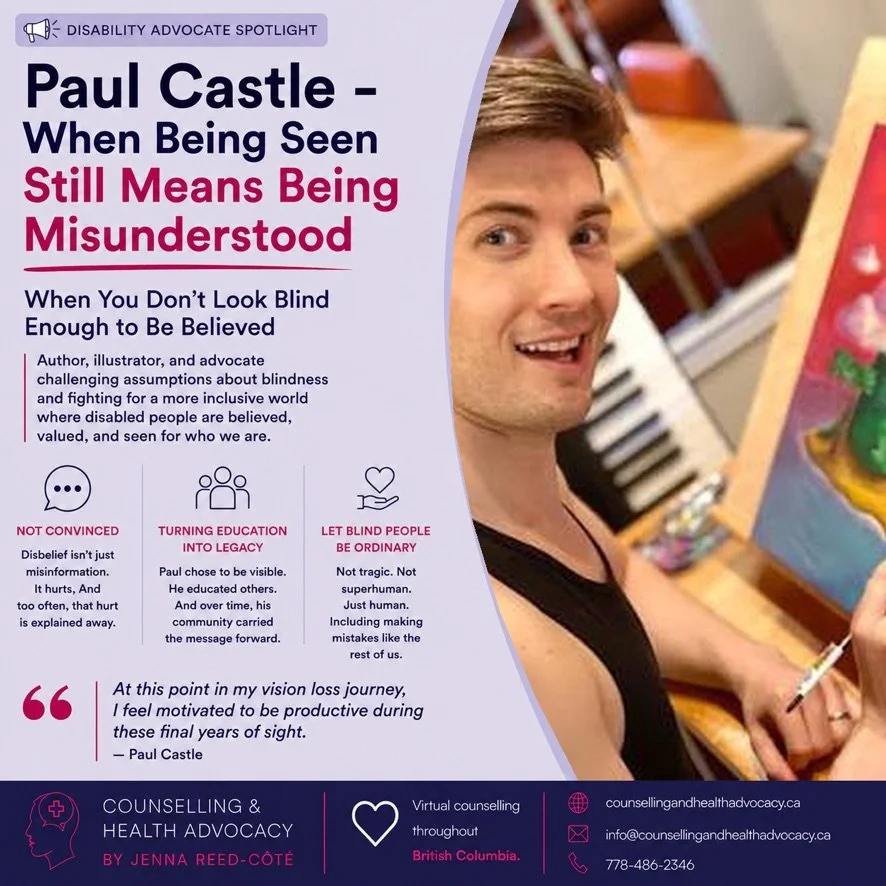
Paul Castle: When Being Seen Still Means Being Misunderstood
Paul Castle once pretended he could see because he was ashamed that he couldn’t. Today, people question whether he’s blind because he doesn’t fit their expectations of blindness. His story asks what happens when other people repeatedly interpret your disability for you—and what that can teach you about trusting your own experience.
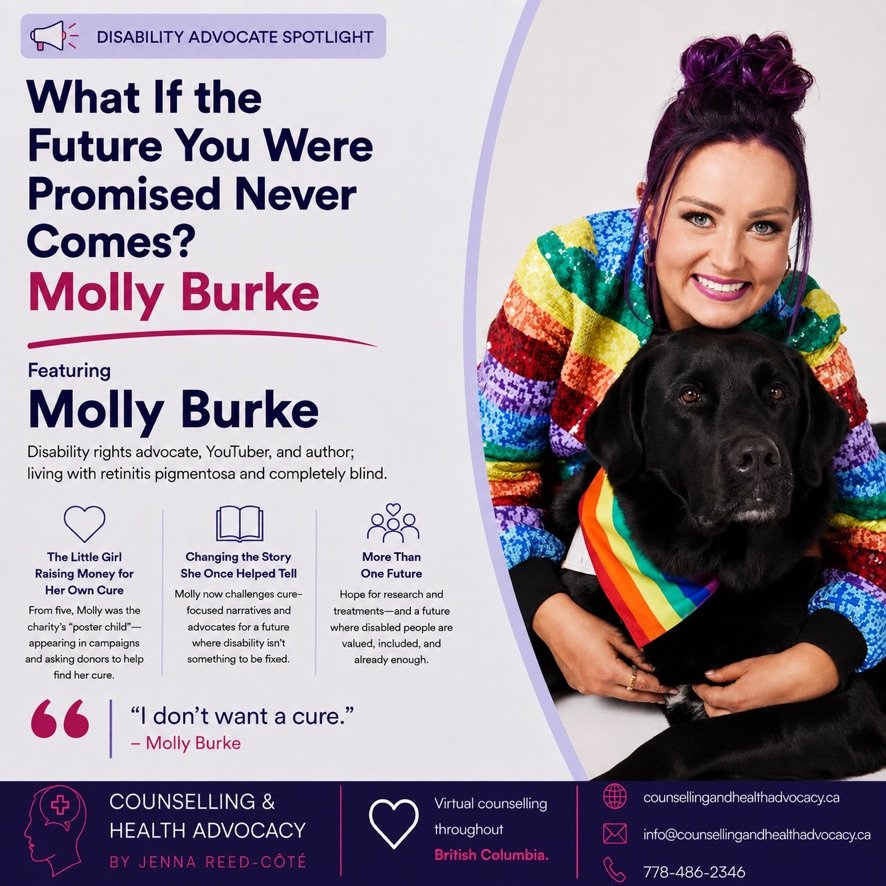
Molly Burke: What If the Future You Were Promised Never Comes?
Molly Burke grew up believing she would be cured of blindness. But what happens when the future you were taught to expect never arrives? Her story raises a powerful question about cure, hope, disability identity, and whether disabled children are also shown a future in which they remain disabled—and are still okay.
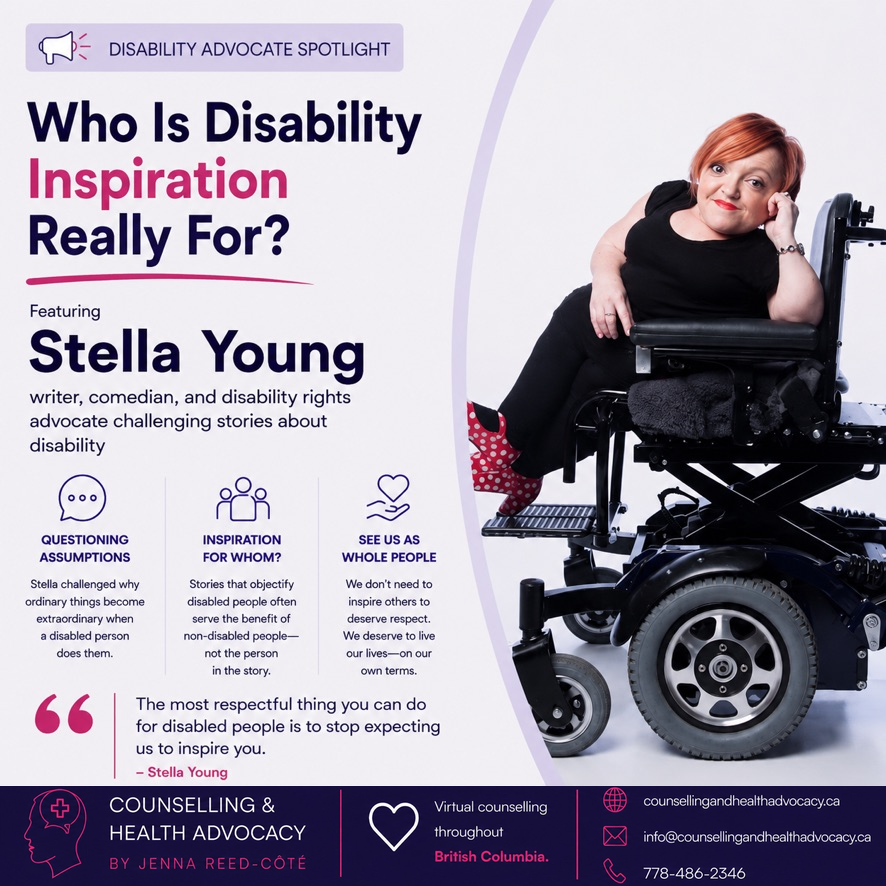
Who Is Disability Inspiration Really For? The Legacy of Stella Young
Stella Young challenged the idea that disabled people are inherently inspirational simply for living ordinary lives. Her work asks us to look beyond good intentions and consider a different question: When a disabled person’s life becomes an inspirational story, who is that story really for?
I'm glad you're here.
Reaching out for support isn't always easy, especially if past experiences have left you feeling unheard or unsure whether therapy can help.
Whether you have a question, want to learn more about Disability-Affirmative Therapy, or are ready to book a consultation, you're welcome to reach out.
I'd be honoured to learn more about what brings you here and explore whether we're the right fit.
778-486-2346