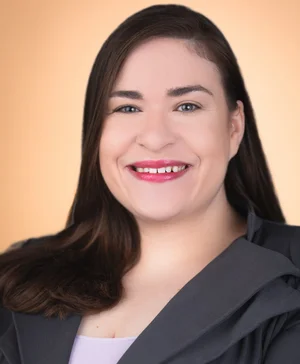
Molly Burke: What If the Future You Were Promised Never Comes?
Molly Burke grew up believing she would be cured. Not vaguely hoping. Waiting.
Molly was diagnosed with retinitis pigmentosa at four years old. Her family was connected with a charity funding vision research, and she says they were told the organization believed she would be cured within ten years.
Molly was five. At that age, ten years probably feels like forever. But it also gives the story an ending.
I'm losing my vision. But they're going to fix it.
Except ten years later, Molly wasn't cured. She went blind.
The little girl raising money for her own cure
Molly didn't spend those years quietly waiting.
At five, she began appearing at fundraising events. Eventually, she became what she describes as the charity's “poster child”—appearing in campaigns, pamphlets, photo shoots, television and fundraising events. By around 11, she was standing in front of donors explaining why it was important that she be cured.
I keep thinking about that. Molly wasn't simply being told a story about her future. She was helping tell it. Raise the money. Fund the research. Find the cure. Save her sight.
Looking back, Molly understands that the adults around her were expressing optimism. But she was a child.
“I believed their optimism because I was a child and you believe adults always tell the truth.” Her parents believed it too. They had been told, “In 10 years, we believe she'll be cured.”
Then ten years came. And so did blindness.
What happens when hope has only one ending?
Molly describes reaching adolescence and realizing there was no cure in sight.
She was going to live as a disabled woman. But what had she learned about that future?
Molly says the message she'd received throughout childhood was that being disabled wasn't good enough. She needed to see. She needed to be cured, healed, changed, fixed.
That's where her story asks a difficult question. What happens when cure is the only future a disabled child is taught to hope for? Because the problem wasn't hope.
Molly is clear that she doesn't oppose medical research. Her criticism is about how that research is marketed. She describes fundraising language focused on everything blindness would supposedly take from her and says she internalized those messages.
If the hopeful ending is always cure, what does that teach a child about the version of themselves who isn't cured?
What if Molly had been given two futures?
Looking back, Molly says they'll never know how differently her life might have unfolded if she'd also been told she was good enough as she was, shown accessibility, and introduced to the blind community she was joining.
That word also matters to me.
Imagine growing up hearing: Researchers are working toward treatments that may help you someday. And: if you become blind, you're going to be okay. There are blind adults living full lives. There are tools and accommodations. There's a community here. Your future doesn't disappear if your sight does.
One future doesn't cancel the other. Disability affirmation doesn't require taking hope away.
Maybe it means making sure hope has somewhere to go if the cure never comes.
“I don't want a cure.”
Eventually, Molly reached a place her younger self wouldn't have understood.
She no longer wanted to be cured. She says it took years of learning about disability rights, understanding social and medical models of disability, unpacking internalized ableism, and learning to accept herself before she genuinely felt she was good enough as she was.
That doesn't mean blindness became easy. Molly says she still grieves and that her life is harder because she is disabled.Both can be true.
You can grieve what disability has changed. You can wish certain things were easier. And you can still not wish for a different version of yourself.
Changing the story she once helped tell
Molly eventually told her parents she no longer wanted to fundraise as part of a narrative that disabled people needed to be medically cured. Their response surprised me.
They were relieved.
According to Molly, her parents said they'd believed helping her pursue a cure was what good parents were supposed to do—because that's what society had taught them. When Molly told them she was okay as she was, they supported her.
I think that's important because there isn't an easy villain in this story. Parents wanted to help their child. Researchers hoped science would progress. Organizations wanted to raise money. A little girl wanted to see. And yet the cumulative message could still become: The person I am today is the temporary version of me we're waiting to fix.
Molly now challenges the very narrative she once stood on stages helping tell.
What Molly's story changes for me as a therapist
Molly's story makes me think about disabled adults who spent childhood waiting for something about their bodies to change. A cure. A surgery. The next treatment. A medical breakthrough.
Perhaps everyone around them genuinely believed they were giving them hope. But what happens when that future doesn't arrive?
Before asking someone to “accept” their disability, perhaps we need to understand the future they were taught to expect. Because they may be grieving more than what happened to their body. They may also be grieving the person they spent years believing they would become.
That leaves me with the question I can't stop thinking about: if you spent years waiting for a future version of yourself without a disability, when did anyone help you imagine a future in which you were disabled and still okay?
More than one future
I don't think Molly Burke's story asks us to stop hoping for medical advances. It asks us to give disabled children more than one future worth hoping for. Research and disability community. Treatment and accommodations. Hope for what might change and the knowledge that their life doesn't have to wait for it.
Molly spent much of her childhood waiting for the future in which she could see. Perhaps one of the most powerful things she's doing now is making another future visible:
The one in which she couldn't—and was still okay.
If you're looking for disability-affirmative therapy in BC, I provide virtual counselling for teens and adults with physical disabilities, chronic illness, medical trauma, and advocacy fatigue. Learn more about Disability-Affirmative Therapy