

Counselling & Health Advocacy Blog
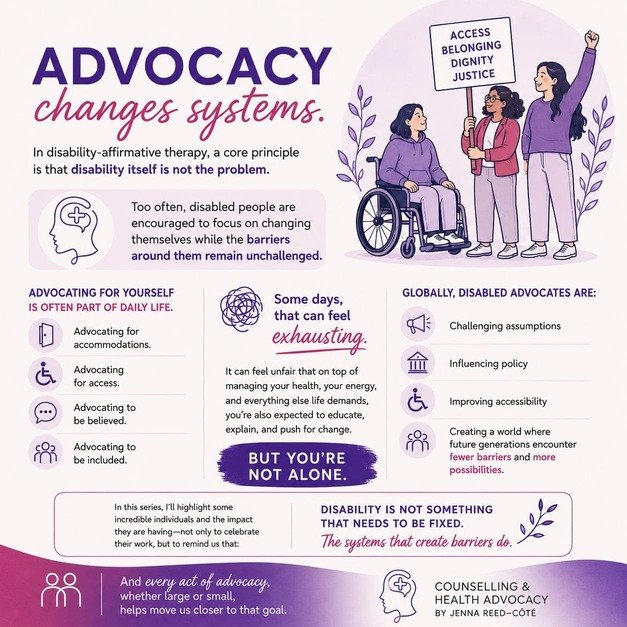
How Disabled Advocates Are Creating a More Accessible and Inclusive World
Access doesn't happen by accident. It happens because someone noticed a barrier and refused to accept it. Meet the disability advocates whose work continues to make the world more accessible for everyone.
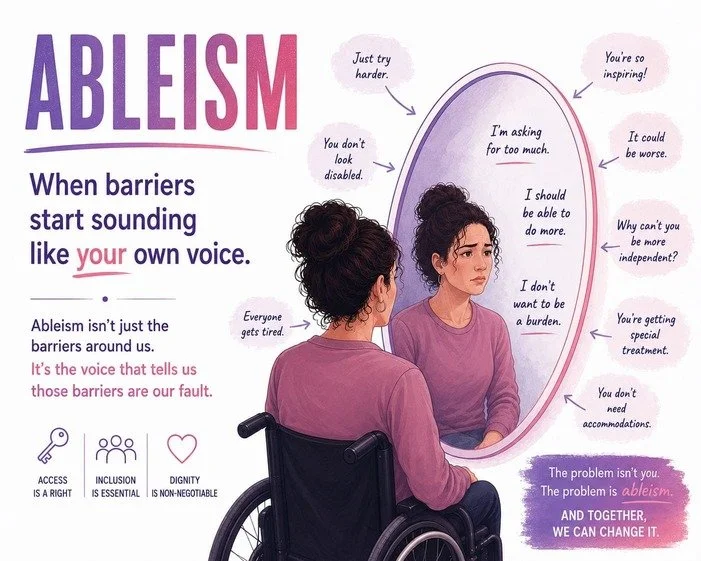
Ableism: What If You're Not the Problem?
What if the problem isn't that you're not trying hard enough? What if you've been adapting all along? Explore how ableism—not disability itself—can shape mental health, self-worth, and the way disabled people see themselves.
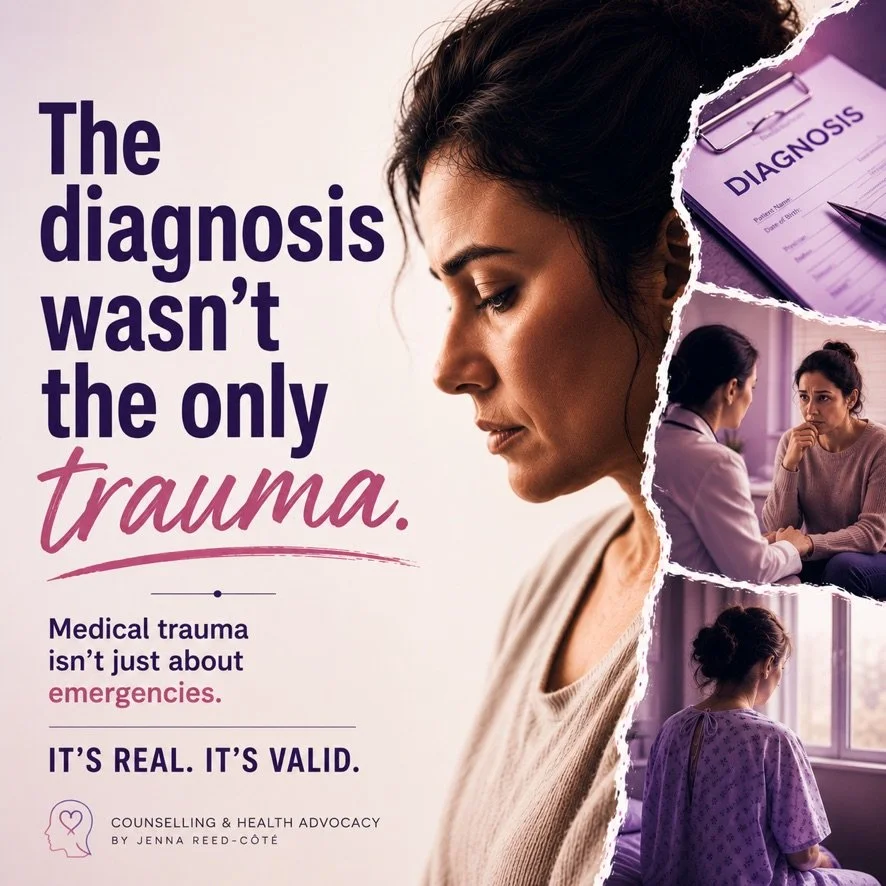
Medical Trauma Isn't Just About Emergencies
Medical trauma doesn't always begin in an emergency room. Sometimes it develops one appointment at a time. Learn why repeated healthcare experiences can shape mental health long after the appointment ends.

The Escape Room You Were Never Meant to Solve Alone
What if the hardest part of therapy isn't doing the work—but trying to solve the wrong problem? Learn why Disability-Affirmative Therapy starts by looking beyond the individual to the barriers, systems, and assumptions that shape emotional well-being.
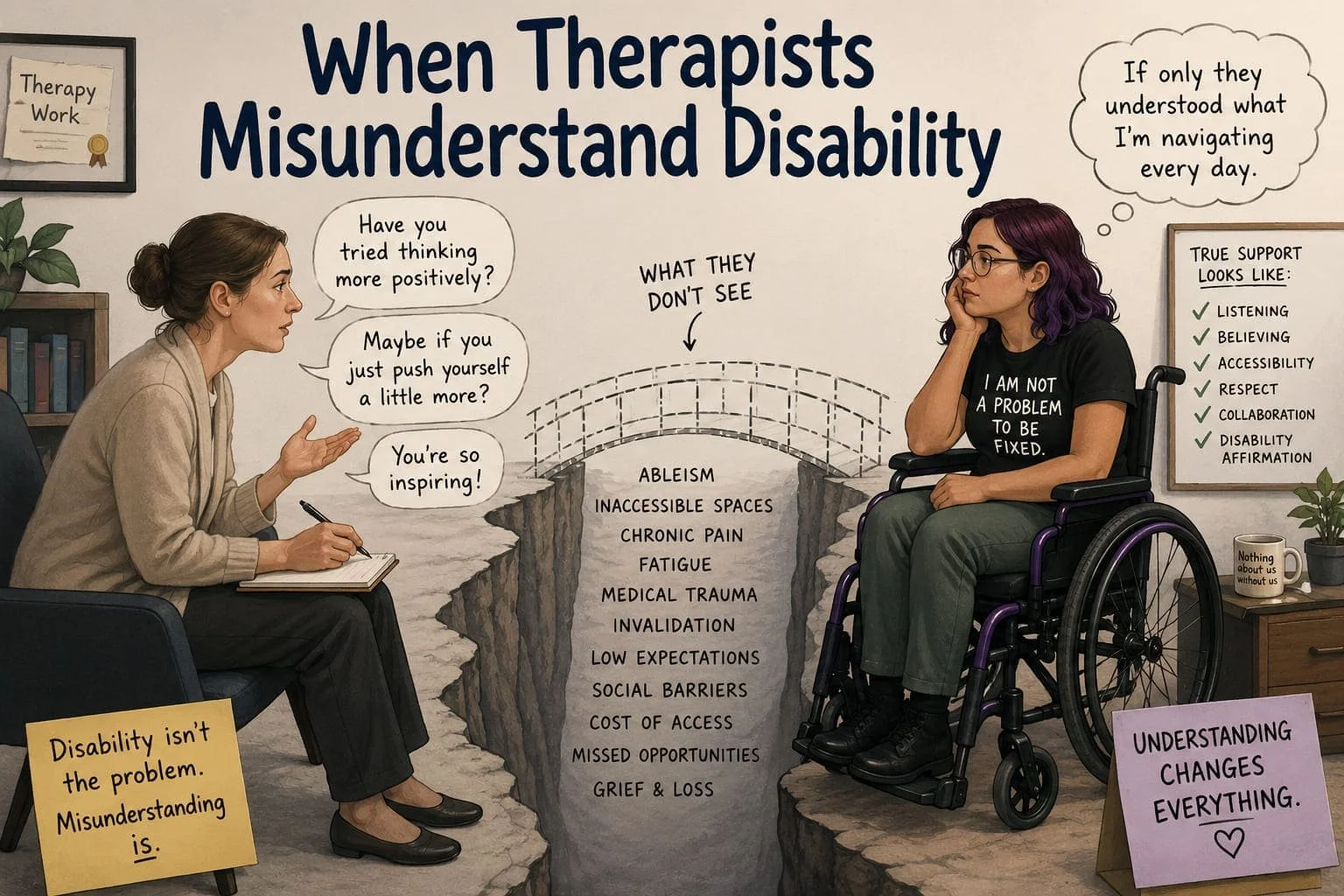
When Therapists Misunderstand Disability
What if the problem isn't that therapy isn't working—but that it wasn't designed with disability in mind? Learn why understanding disability can change the way therapy supports healing.
What to Expect During Your First Disability-Affirmative Therapy Session
Starting therapy can feel uncertain, especially if past healthcare experiences have left you feeling unheard. Learn what you can expect during your first Disability-Affirmative Therapy session.
How to Tell If a Therapist Is Actually Disability-Affirming | 10 Questions to Ask
Not every therapist who says they're disability-affirming has the same understanding of disability. Learn what to look for—and the questions that can help you find the right fit.
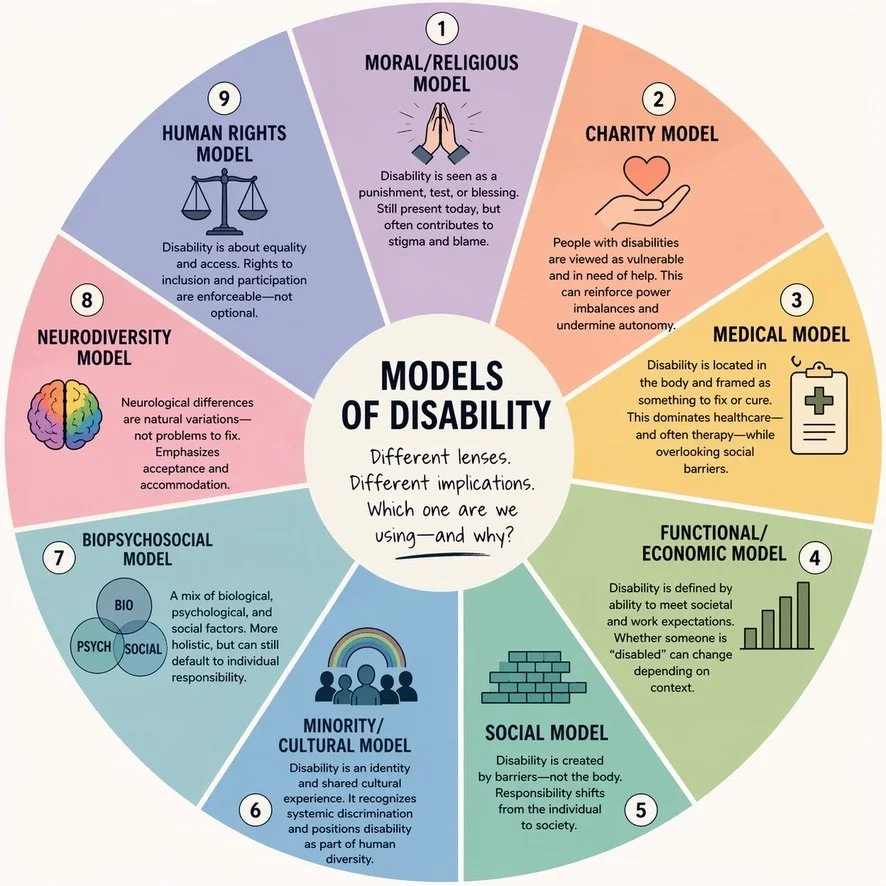
Understanding the 9 Models of Disability: From Medical to Disability Justice
Disability isn’t understood in just one way. Over time, different models of disability have shaped how society explains disability, who is responsible for change, and what support should look like. These models influence everything—healthcare, therapy, education, and policy.
I'm glad you're here.
Reaching out for support isn't always easy, especially if past experiences have left you feeling unheard or unsure whether therapy can help.
Whether you have a question, want to learn more about Disability-Affirmative Therapy, or are ready to book a consultation, you're welcome to reach out.
I'd be honoured to learn more about what brings you here and explore whether we're the right fit.
778-486-2346