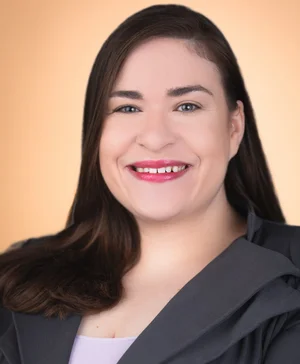
When Accessibility Comes Last, Disabled People Pay First: Haben Girma and Why Good Design Includes Everyone
Good design is almost invisible.
Most people don't think about automatic doors. Closed captions. Screen readers. Clear signage. Or websites that work with assistive technology. Until one of those things isn't there. Then suddenly...Someone pays the price.
Too often, that someone is disabled. Few people have challenged the hidden cost of inaccessible design more thoughtfully than Haben Girma. As the first Deafblind person to graduate from Harvard Law School, Haben is often recognized for breaking barriers. But I don't think that's what makes her work so influential.
I think her greatest contribution has been changing how we think about accessibility itself. Not as an accommodation. But as good design.
Every Design Decision Includes Someone—or Excludes Someone
When accessibility is treated as something to consider later, disabled people rarely experience that as a minor inconvenience.
They experience it as another barrier. A website that doesn't work with screen readers. A meeting without accessible communication. An online form that can't be completed independently. Technology that assumes everyone interacts with it in exactly the same way.
Those aren't isolated problems. They're design decisions. Or more accurately...They're the absence of design decisions. Accessibility isn't usually impossible. It was simply never considered.
What Haben Girma Changed
One of the things I admire most about Haben Girma's advocacy is that she doesn't simply identify barriers. She changes the conversation about who is responsible for removing them.
As a disability rights lawyer, author, and international speaker, Haben has worked with governments, universities, and companies including Apple, Google, and Microsoft to improve digital accessibility and inclusive design.
Rather than encouraging disabled people to become better at adapting to inaccessible technology, she challenges organizations to build accessibility into products and services from the very beginning.
Her advocacy has also transformed how many people think about communication. Using refreshable Braille displays, screen readers, and other accessible technologies, Haben demonstrates that communication barriers are rarely inevitable. They're often the result of environments being designed without disability in mind.
She reminds us that accessible technology isn't remarkable because it accommodates disabled people. It's remarkable because it allows more people to participate. That's what good design does.
Accessibility Benefits Everyone
One of the biggest misconceptions about accessibility is that it only benefits disabled people. The reality is much broader. Captions help people watching videos in noisy environments. Automatic doors help parents pushing strollers, travellers with luggage, delivery workers, and people carrying groceries. Voice recognition benefits people driving, cooking, or recovering from injuries. Clearer websites make information easier for everyone to find.
Accessibility isn't about creating a separate experience for disabled people. It's about designing better experiences in the first place. That's why inclusive design isn't simply compassionate.It's innovative.
Why This Work Still Matters
One of the reasons I wanted to feature Haben Girma in this Disability Advocate Spotlight series is because her work highlights something I see often in disability-affirmative therapy. Not just physical barriers. The invisible work of constantly anticipating them.
Many disabled people become experts at planning around inaccessible systems. Checking whether a website will work before filling out a form. Wondering whether a virtual appointment platform is compatible with assistive technology. Planning for what they'll do if communication breaks down. Thinking three steps ahead because accessibility can never be assumed.
Over time, that planning becomes so routine that many people stop noticing they're doing it. But it still requires energy. Mental energy. Emotional energy. Time.
Disability-affirmative therapy creates space to recognize that invisible labour. Not because planning is wrong. But because constantly anticipating barriers isn't simply part of someone's personality. It's often a response to living in a world where accessibility can't always be taken for granted.
That's a very different conversation. Instead of asking,
"How can I become better at adapting?"
We can begin asking,
"Why am I carrying so much of the responsibility for accessibility in the first place?"
The Legacy of Disability Advocacy
Haben Girma reminds us that accessibility isn't something to add after everything else has already been designed. It belongs at the beginning.
She has challenged technology companies, educators, governments, and organizations to recognize that accessibility isn't a feature. It's part of good design. Because every time accessibility is left until the end...
Disabled people absorb the consequences. More time adapting. More time waiting. More time explaining. More time finding workarounds. More energy simply trying to participate.
It doesn't have to be that way.
Good design doesn't ask disabled people to carry the cost of exclusion.
It removes unnecessary barriers before they exist.
That's the legacy Haben Girma continues to build.
And that's why her work continues to matter.
If you're looking for disability-affirmative therapy in BC, I provide virtual counselling for teens and adults with physical disabilities, chronic illness, medical trauma, and advocacy fatigue. Learn more about Disability-Affirmative Therapy