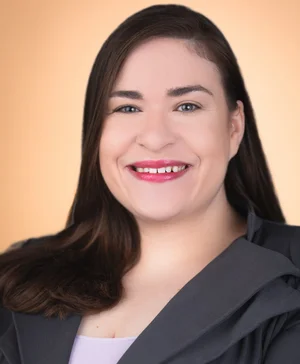
When Survival Is Mistaken for Noncompliance: The Legacy of Dr. Paige Church
For many disabled people, trust in healthcare isn't lost all at once. It can disappear one appointment at a time.
The treatment plan makes sense. But somewhere in the discussion, you try to explain what carrying out that plan would actually mean. What it would cost. Your ability to work. To parent. To study. To sleep. To leave the house. To simply enjoy being alive.
Instead of hearing,
"Tell me more."
The message can begin to feel more like,
"You'll thank me later."
Sometimes nothing is said at all.
The conversation simply moves on. You leave wondering whether your life ever became part of the conversation. The treatment is documented. What it asks of your life often isn't. And something begins to shift. Not necessarily your willingness to seek care. But your willingness to believe that bringing your whole experience into the room will make a difference.
For some disabled people, every appointment can begin to feel less like a partnership...and more like a cross-examination of whether their lived experience is credible.
Until, eventually, silence feels safer.
Dr. Paige Church Refused to Stop at the First Answer
Dr. Paige Church refused to stop at the first answer. She grew up in a physician's family while also growing up with spina bifida.¹ From childhood, healthcare was part of everyday life—both as a patient with spina bifida and as the daughter of a physician.¹ Not because medicine needed less expertise. Because it needed to make room for another kind of expertise, too.
One conversation she shared has stayed with me.² After spending only a few minutes with a child and their family, a physician concluded that the child was "noncompliant" with their medical management. He questioned whether it made sense to offer what he described as "bigger opportunities like surgery."²
Dr. Church challenged him. Not by questioning the treatment. But by asking what it would be like to live with that reality.²
"How many times would you continue following a treatment if it meant having an accident at work once a week? Twice a week? At what point would you decide, 'This isn't working?'"²
Then she said something that has stayed with me ever since. "They're not noncompliant. They're surviving."² What stayed with me wasn't simply what she said. It was the question underneath it.
Instead of asking,
"Why aren't they following the treatment?"
Dr. Church invites us to ask,
"What might this behaviour be protecting?"
Behaviour rarely tells the whole story. Context fills in the rest. Sometimes what looks like noncompliance...is someone trying to preserve the life they've worked so hard to build. I wonder how many disabled people have left healthcare appointments feeling that their hesitation was interpreted as resistance...rather than context.
That their questions and points of view sounded like excuses...rather than an essential part of understanding what life with that condition actually looks like. That the realities of everyday life became secondary to a treatment plan that made perfect medical sense on paper.
When that happens repeatedly, something else begins to change. Trust. Some people begin arriving at appointments expecting another battle. Some put off follow-up care. Some stop participating or asking questions altogether. Not because they don't care about their health. But because they've learned that telling the truth about what isn't sustainable doesn't always change the conversation.
Trust isn't simply something that makes healthcare feel better. It's part of what makes healthcare work.
Watching Dr. Church ask different questions changed the kinds of questions I want to ask. Instead of wondering whether someone is following the plan—I find myself wondering what the plan is asking of their life.
Trust begins long before someone decides whether to follow a recommendation. It begins with whether they feel understood. For many families, that begins with the very first conversation.
Every day, families hear,
"Your baby has spina bifida."
For many, it is one of the most overwhelming conversations of their lives. Those first conversations are about far more than a diagnosis. They become the foundation for how families understand disability. What questions feel safe to ask. Whose expertise matters. What kind of future feels possible.
Dr. Paige Church has spent her career helping shape those conversations.³ Not by minimizing disability. Nor by allowing a diagnosis to become the whole story. But by making room for something alongside medical expertise that is equally important.
Families don't just need treatment plans. They need healthcare relationships built on trust. Relationships that begin with someone asking,
"Tell me more."
If you're looking for disability-affirmative therapy in BC, I provide virtual counselling for teens and adults with physical disabilities, chronic illness, medical trauma, and advocacy fatigue. Learn more about Disability-Affirmative Therapy
Footnotes
1. Louise Kinross, "A Doctor Reveals Her Hidden Disability," BLOOM Blog, Holland Bloorview Kids Rehabilitation Hospital, August 11, 2017, https://hollandbloorview.ca/stories-news-events/BLOOM-Blog/doctor-reveals-her-hidden-disability; White Coat, Black Art, "She Kept Quiet for Years. Now This Doctor Is Talking About Her Own Disability," CBC Radio, November 29, 2017, https://www.cbc.ca/radio/whitecoat/she-kept-quiet-for-years-now-this-doctor-is-talking-about-her-own-disability-1.4405228.
2. Docs With Disabilities, "Dr. Paige Church, MD, Assistant Professor of Pediatrics, University of Toronto," podcast episode, June 25, 2020, https://docswithdisabilities.libsyn.com/dr-paige-church-md-assistant-professor-of-pediatrics-university-of-toronto.
3. Kinross, "A Doctor Reveals Her Hidden Disability"; White Coat, Black Art, "She Kept Quiet for Years"; Docs With Disabilities, "Dr. Paige Church, MD, Assistant Professor of Pediatrics, University of Toronto."
Bibliography
Docs With Disabilities. "Dr. Paige Church, MD, Assistant Professor of Pediatrics, University of Toronto." Podcast episode. June 25, 2020. https://docswithdisabilities.libsyn.com/dr-paige-church-md-assistant-professor-of-pediatrics-university-of-toronto.
Kinross, Louise. "A Doctor Reveals Her Hidden Disability." BLOOM Blog. Holland Bloorview Kids Rehabilitation Hospital. August 11, 2017. https://hollandbloorview.ca/stories-news-events/BLOOM-Blog/doctor-reveals-her-hidden-disability.
White Coat, Black Art. "She Kept Quiet for Years. Now This Doctor Is Talking About Her Own Disability." CBC Radio. November 29, 2017. https://www.cbc.ca/radio/whitecoat/she-kept-quiet-for-years-now-this-doctor-is-talking-about-her-own-disability-1.4405228.